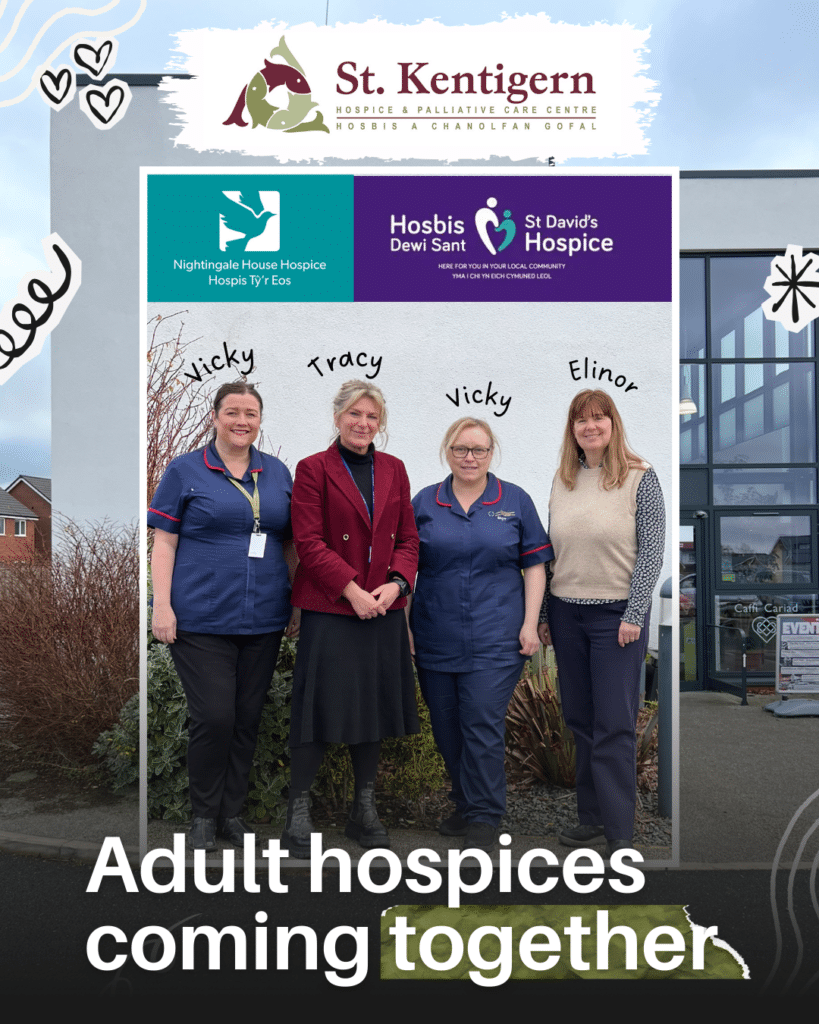
This month, St Kentigern Hospice had the pleasure of welcoming colleagues from across our wider hospice and healthcare community for an important visit focused on collaboration, understanding and shared learning.
Our Matron, Vicky, welcomed Vicky, Specialist Palliative Care Team Lead from the Health Board, Tracy, Clinical Lead from Nightingale House Hospice, and Elinor, Clinical Lead from St David’s Hospice. The visit provided an opportunity to spend time together within our hospice environment, beginning with a tour of our facilities and followed by open and meaningful conversations about the realities facing adult hospices today.
Sharing Experience and Understanding
Hospice care is built on compassion, dignity and holistic support, but behind the scenes services across the UK are navigating increasingly complex challenges. By bringing clinical leaders together in one place, we were able to speak honestly about the pressures affecting our organisations, our staff and ultimately the patients and families we care for.
Discussions covered workforce pressures, rising demand for services, and the importance of maintaining high‑quality personalised care in a changing healthcare landscape. Although each organisation operates independently, the similarities in our experiences were clear — reinforcing the value of connection and collaboration across hospice services.
These conversations are not simply administrative. They shape how we support one another, share ideas and ensure that patients continue to receive the compassionate care they deserve regardless of where they live.
Why Collaboration Matters
Hospices are often seen as individual organisations, but in reality they form a wider network of support across communities. By strengthening relationships between services, we can:
- Share knowledge and best practice
- Improve patient pathways between services
- Support staff wellbeing through peer connection
- Develop consistent approaches to palliative care
- Advocate more effectively for hospice services
Working together helps us avoid working in isolation. When services communicate openly, we create stronger systems of care for patients and families who rely on us during some of the most difficult times in life.
A Shared Commitment to Compassionate Care
Despite the challenges discussed, one theme remained constant throughout the visit — a shared commitment to ensuring patients feel safe, supported and never alone. Every hospice represented at the meeting provides care centred around dignity, reassurance and quality of life, and collaboration helps protect those values into the future.
The visit reinforced that hospice care extends far beyond buildings. It is a community of professionals and organisations united by a common purpose: supporting people to live as well as possible, for as long as possible.
Looking Ahead
Maintaining strong connections between adult hospices and healthcare partners has never been more important. Continued dialogue allows us to adapt, learn and improve together, ensuring services remain sustainable while preserving the compassionate approach at the heart of hospice care.
We are grateful to our colleagues for taking the time to visit and share their insights. Opportunities like this strengthen not only our professional relationships but also the support network surrounding the patients and families we care for every day.
By working together, we can continue providing comfort, understanding and dignity when it matters most.